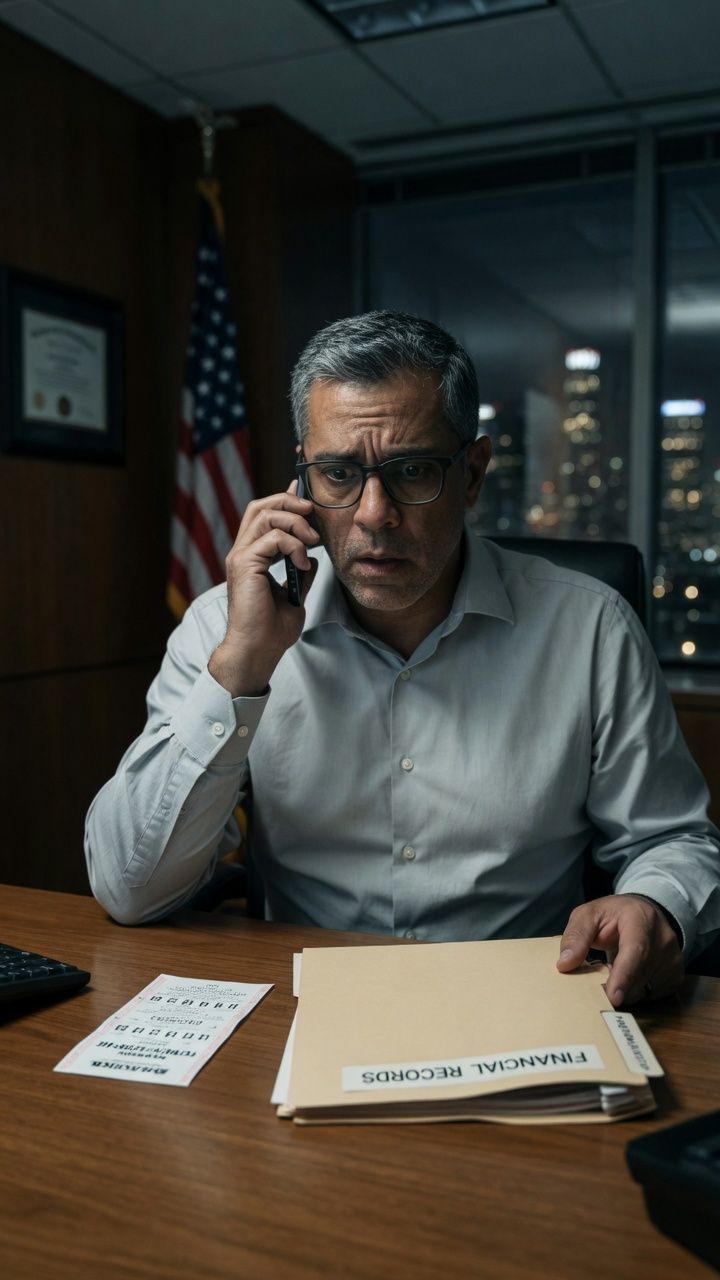

My parents bought my sister a $150,000 yacht while I sat in a military clinic begging them for $5,000 to save my leg.
They were opening champagne when a doctor told me I might never walk normally again.
They still believed I was the daughter they could dismiss, humiliate, and discard whenever I became inconvenient.
But they had no idea that my younger brother’s desperate act of love was about to hand me the one thing my family feared above all else.
Power.
—
I was still in my combat uniform when my father finally picked up.
My injured knee was sealed inside a heavy brace, swollen and throbbing with every heartbeat, while my hands gripped the edge of an exam table in a military clinic outside San Diego. The doctor had just told me that without private surgery by Thursday, the damage could become permanent.
Permanent.
The word kept hammering through my skull.
“Dad,” I said quietly, fighting to keep my voice steady. “The doctor says I need surgery. Five thousand dollars. I wouldn’t ask if it weren’t serious.”
Silence for a moment. Then background noise filtered through the line.
Music. Laughter. The sharp, celebratory pop of a champagne cork.
My father exhaled like I had interrupted something that actually mattered.
“Emily, this is terrible timing. We just finalized Madison’s yacht.”
I stared at the blank white wall in front of me.
“A yacht?”
Somewhere behind him, my mother laughed.
“Tell her not to be so dramatic!”
Then Madison took the phone.
“Emily, seriously?” she snapped. “Can you stop ruining my party? Take some Advil or something.”
Something inside me went very quiet.
I had served my country. I had pushed through pain, exhaustion, danger, and fear without complaint, without asking for anything. But to my own family, my leg was worth less than a toast on my sister’s new toy.
I ended the call without saying goodbye.
—
Two days later, someone knocked on my apartment door.
When I opened it, my little brother Jake was standing there with grease under his fingernails and eyes swollen from crying. He was only twenty, but he looked like the world had aged him a decade overnight.
“I’m sorry,” he said, pressing a folded stack of cash into my hands. “It’s only eight hundred and forty dollars.”
My throat closed.
“Jake. Where did you get this?”
His mouth trembled.
“I sold Grandpa’s Snap-on tools.”
I couldn’t speak.
Those tools were not just steel and rubber grips. They were Jake’s inheritance and his dream. Our grandfather had left them specifically to him, and Jake had talked for years about the garage he would open someday, the business he would build from nothing. He had sold his future so I could still have mine.
Then he set a wrinkled lottery ticket on top of the cash.
“I bought it with the change,” he whispered. “Maybe God owes us one miracle.”
I wanted to fall apart right there in the doorway.
—
The next morning, when I checked the numbers, I didn’t cry.
I didn’t scream.
I could barely breathe.
Every single number matched.
Two point four million dollars.
I sat motionless for a long time, staring at the ticket while Jake slept on my couch, completely hollowed out from worry. The apartment was perfectly still. Outside, the city was already moving, indifferent as always, and I was sitting in the middle of it holding something that could change everything.
I didn’t call my parents.
I didn’t call Madison.
I didn’t celebrate.
I strapped on my brace, grabbed my crutches, and drove straight to one of the most expensive law firms in downtown Los Angeles.
The attorney glanced at my worn jacket. Then his eyes dropped to the lottery ticket I slid across his desk.
“I want this claimed anonymously,” I said. “And I want a forensic investigation into my parents’ finances.”
His gaze sharpened.
“Do you understand what you’re asking for?”
I leaned forward.
“It means war.”
He studied me for a long moment, the way people do when they’re deciding whether you’re serious or simply angry.
“Against your own family?”
I thought of Madison laughing while I begged for help. I thought of my mother sipping champagne and calling me dramatic. I thought of my father deciding that his daughter’s leg was not worth five thousand dollars.
Then I thought of Jake, standing in my doorway with red eyes and grease-stained hands, selling his grandfather’s dream so I wouldn’t lose mine.
“Yes,” I said. “Dig until you find everything.”
The attorney slowly opened a fresh file.
Then his phone rang.
He answered it, listened for three seconds, and looked up at me.
His expression had changed completely.
What the Attorney Knew
He set the phone down carefully. Not the way you set something down when you’re done with it. The way you set something down when you need both hands free to think.
“That was my associate,” he said. “She ran the preliminary search I asked for while you were parking.”
I waited.
“Your father is being investigated by the IRS. Has been for fourteen months.”
The room stayed very still.
“The yacht,” he said, “was not purchased with your parents’ money.”
He let that land.
“It was purchased through a shell company your father set up in your sister’s name. Madison’s name is on a series of financial instruments your father has been using to shelter income he hasn’t declared.” He folded his hands on the desk. “Your sister may not even know. Or she may know exactly. That’s what we’d need to find out.”
I thought about Madison on the phone, sharp and dismissive. Take some Advil or something. I thought about how she’d never once in her life looked at me like I was worth the trouble.
Maybe she didn’t know. Maybe she did.
It didn’t change what my parents had done. But it changed what I was holding.
“How much are we talking about?” I asked.
He named a number.
I didn’t flinch. Somewhere in the back of my head, the part of me that had learned to stay calm under pressure – the part the Army built – just filed it away and kept moving.
“So when I claim this anonymously,” I said, “they won’t know it’s me.”
“Not immediately. Not if we’re careful.”
“And the investigation into their finances?”
“Already in motion.”
I looked at him. “How do you move that fast?”
He almost smiled. “You’re not the first person to walk in here with something they’ve been sitting on for a long time.”
The Surgery
I had the operation on a Wednesday. A private hospital in Westwood, a surgeon my attorney’s office recommended, and Jake in the waiting room eating vending machine crackers because he’d forgotten to eat breakfast.
The surgery took three hours.
When I woke up, the first thing I saw was Jake asleep in the chair beside my bed, mouth open, chin on his chest. He’d pulled his hoodie over his face at some point and it had slipped sideways. He looked twelve years old.
I lay there watching him breathe and thought about those tools. His grandfather’s tools. The ones with the red handles and the organized case that he’d kept cleaner than anything else he owned. He used to show them to me when we were kids, explain what each one did, and I’d pretend to care even when I didn’t because the look on his face was worth it.
I was going to get those tools back.
I didn’t know how yet. Whoever bought them, whatever it cost. I was getting them back.
Jake stirred. Looked over at me.
“Hey,” he said, voice rough with sleep.
“Hey.”
He sat up and rubbed his face. “How do you feel?”
“Like someone took a very expensive power drill to my knee.”
He laughed. It was a thin, tired laugh, but it was real.
“The doctor said it went well,” he said. “He said you’ll walk fine. He said – ” His voice cracked. He looked down at his hands. “He said you’ll be okay.”
I didn’t say anything.
Neither did he.
That was enough.
My Parents Called
They called on a Thursday, eleven days after my surgery. My mother first, then my father, then Madison in a group text that read just checking in hope ur ok with a small heart emoji that felt like a slap.
I didn’t respond to any of them.
My attorney had advised silence, and I was good at following orders when they made sense. But it wasn’t just strategy. I genuinely had nothing to say. There was no version of that conversation I wanted to have yet. Not while my leg was still healing. Not while I was still building what came next.
My father left a voicemail.
I listened to it once.
He said he hoped I was recovering. He said the timing of everything had been difficult. He used the word timing three times in ninety seconds, like the problem was a calendar conflict and not a choice he’d made with full information and zero hesitation.
I deleted it.
What Jake Got Back
Six weeks after the surgery, I drove to a house in Reseda.
The man who answered the door was named Dennis, fifty-something, hands like a mechanic, suspicious eyes. He’d bought the tools at a pawn shop for four hundred dollars and brought them home because he’d known exactly what they were worth.
“I’ll give you twelve hundred,” I said.
He looked at me.
“Cash.”
He sold them.
I drove back to Jake’s apartment with the red-handled case in my trunk and knocked on his door at 7 p.m. on a Tuesday. He opened it in a work shirt, still half in his head from whatever he’d been doing, and then he saw what I was carrying.
He didn’t say anything for a long time.
Then he said, “Emily.”
“Don’t,” I said.
He took the case from me. Held it like it weighed more than it did. Set it down on his kitchen table and opened it, and just looked at everything arranged the way their grandfather had arranged it, every tool in its place.
His jaw worked.
“You didn’t have to do that.”
“I know.”
I left before he could say anything else. Some things don’t need a speech. They just need to be done.
The Letter
My attorney sent the letter to my parents on a Monday in early March.
It was not a dramatic letter. It didn’t threaten. It didn’t accuse. It was clean and precise and completely devastating in the way that only legal language can be, because legal language doesn’t need to raise its voice.
It informed them that an anonymous third party had retained counsel and was cooperating fully with the ongoing federal investigation into their financial practices. It noted that certain assets, including a recently acquired vessel registered in Madison’s name, had been flagged for review. It requested that all communication be routed through the law firm going forward.
It did not say my name anywhere.
It didn’t need to.
My father called my cell phone four times that afternoon. My mother called twice. Madison sent a text that said what did you do in all lowercase, which told me she knew more than she’d let on.
I sat in my apartment with my leg stretched out on the coffee table, a cup of coffee going cold beside me, and watched the calls come in.
I didn’t answer.
Outside, it was raining. A real rain, the kind that actually clears the air in Los Angeles, which almost never happens. The street below my window was dark and wet and empty.
I thought about my father’s voicemail. The timing of everything had been difficult.
I thought about the champagne cork.
I thought about Jake’s face when he handed me eight hundred and forty dollars and a lottery ticket, like he was sorry it wasn’t more.
My phone buzzed again.
Dad.
I set it face-down on the cushion beside me and picked up my coffee.
It had gone completely cold. I drank it anyway.
—
If this one hit somewhere real, pass it on to someone who needs to hear it.
For more jaw-dropping stories about family dynamics, you won’t want to miss reading about when a mother-in-law expected her son’s girlfriend to pay for $1,012 worth of groceries, another person who ended their engagement party over insults, and the chilling tale of parents who abandoned their child and grandchild in the desert.