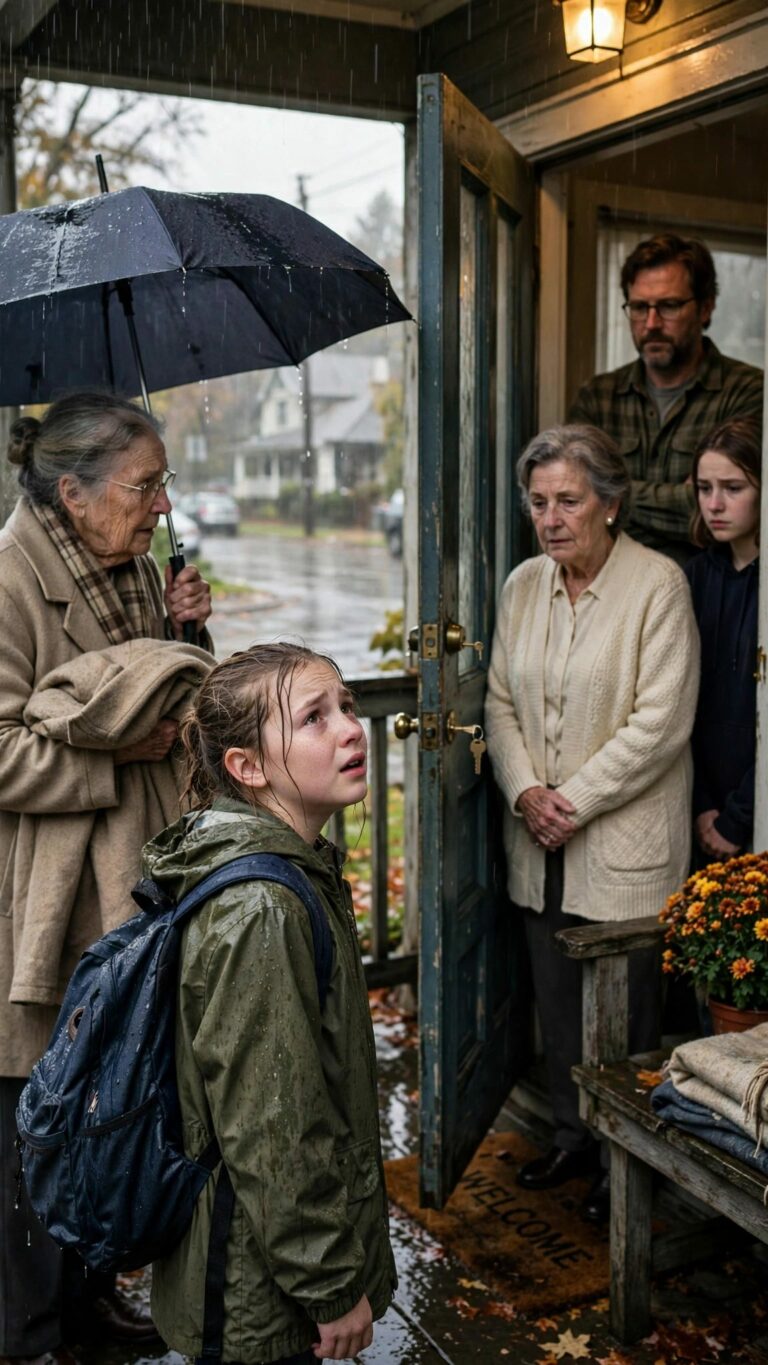

My mother always said my brother was the future of our family, while I was expected to disappear quietly. So when Dad died, they tried to sell our home to pay Liam’s $340,000 gambling debt and pushed me out in front of everyone. But they didn’t know Dad had hidden one final secret for me – and when the lawyer revealed it, my brother’s smile vanished.
Part 1: The Funeral Betrayal
The morning of my father’s funeral should have been about honoring his memory.
Instead, it became the day my family tried to erase my future.
As I sat in the third row of Kensington Memorial Chapel, surrounded by flowers and carefully rehearsed grief, I felt strangely detached. My mother, Penelope Finch, looked perfectly composed in black, while my older brother, Liam, seemed far more interested in what would happen after the service than in saying goodbye to our father.
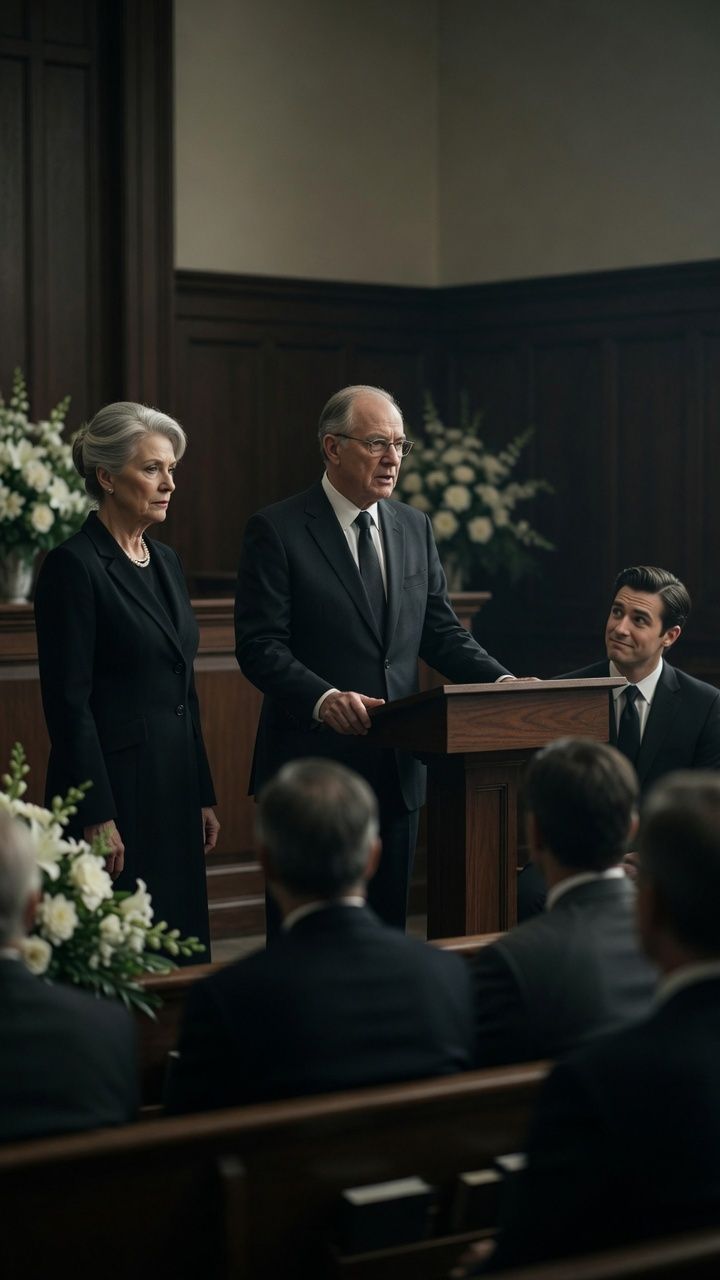
When family members were invited to speak, Liam stepped confidently to the podium. His tribute sounded heartfelt, filled with stories about fishing trips and fatherly advice. The guests listened quietly, believing every word.
Then his speech changed.
He explained that our father’s passing had left the family with difficult financial obligations and announced that the house on Willow Creek Drive would be sold immediately.
He called it a necessary sacrifice.
I knew exactly what he meant.
For months, my mother had hidden the truth behind gentle language. Liam had accumulated nearly $340,000 in gambling debt, and they intended to pay it by selling the only home my father had spent his life building.
Before I could respond, my mother stood.
Without even looking toward my father’s casket, she turned to me.
“Your father would understand,” she said calmly. “Liam needs help. You have your own career and can live anywhere. You’ll have to move out.”
She announced my eviction as though it were a minor inconvenience.
Around forty guests sat in stunned silence.
Some looked sympathetic.
Others simply looked away.
No one spoke.
The scene felt painfully familiar.
Growing up, Liam had always been treated as the future of the Finch family, while I was expected to sacrifice quietly. When I earned admission to excellent universities, my mother questioned whether investing in my education made sense. “You’re a daughter,” she once told me. “Eventually you’ll leave. Liam needs the opportunities more.”
My father remained silent.
So I stopped expecting help.
I paid my own way through college, built a successful career in forensic accounting, and eventually became financially independent. For nearly two years I barely spoke to my family. Then my father died.
When I returned to Willow Creek Drive after his stroke, I found expensive luggage, golf clubs, and luxury purchases filling the house while Liam, who barely worked anymore, continued spending recklessly. Even my old bedroom had become storage for his newest purchases.
Instead of arguing, I handled the funeral arrangements while Liam entertained guests and performed grief whenever people were watching.
One evening I overheard him whispering on the phone.
“Just give me until the end of the week. The house is as good as sold.”
The moment he saw me, he ended the call.
That was when I realized there was far more happening than anyone admitted.
Just as Liam finished announcing the sale during the funeral, an unexpected sound echoed through the chapel.
A chair scraped loudly across the floor.
Family attorney Irving Scott slowly stood.
Looking directly at my mother and brother, he calmly said, “I’m afraid you’ve misunderstood Mr. Finch’s final instructions.”
The room fell silent.
Liam’s confident smile disappeared.
For the first time that day, I sensed everything was about to change.
Part 2: What Irving Knew
Irving Scott had been my father’s attorney for twenty-two years.
He was sixty-something, compact, with reading glasses he kept pushing up his nose and a voice that never got loud because it never needed to. I’d met him twice as a child, once when my parents updated their will after my grandmother died, and once at a Fourth of July party where he stood near the potato salad and talked to no one for most of the afternoon.
He was not a dramatic man.
Which is why, when he stood up in that chapel, every single person in the room went still.
Liam recovered first. He turned from the podium with a thin smile, the kind he used on people he thought were wasting his time. “Irving, the family appreciates your presence. But this is neither the time nor – “
“Mr. Finch revised his estate documents eleven months ago,” Irving said. He wasn’t looking at Liam anymore. He was looking at me. “There are instructions that need to be read before any decisions are made about property.”
My mother’s composure cracked, just slightly. A tightening around her mouth.
“This is a funeral,” she said.
“Yes,” Irving said. “I know.”
He sat back down.
That was it. No further explanation. He put his glasses back in his breast pocket and folded his hands in his lap and waited for the service to end like a man who had all the time in the world.
Liam shot me a look across the chapel that was supposed to be threatening. I’d seen that look my whole life. It meant: stay out of this. It meant: you don’t matter enough to fight. It meant whatever he needed it to mean to get me to go quiet.
I looked back at him and didn’t move.
Part 3: The Reading
We gathered in the side room of the funeral home an hour after the service. Wood-paneled walls, a rectangular table, six chairs. Irving spread documents across the surface with the practiced calm of someone who’d done this hundreds of times and knew that the next thirty minutes would be ugly.
My mother sat with her hands folded. Liam sat beside her, leaning back, one ankle crossed over his knee. Comfortable. Like this was already settled.
I sat across from them.
My father had revised his will in September of the previous year. Irving walked through the standard language first, the accounts, the car, personal effects. My mother received the savings account, which had about $14,000 left in it. Liam got the golf clubs he’d already taken from the garage. Some jewelry went to my aunt in Tucson.
Then Irving turned a page.
“The property at 14 Willow Creek Drive,” he read, “is to be transferred in full to my daughter, Claire Finch, as sole owner, with no encumbrances, liens, or obligations attached.”
The room didn’t explode. It went cold.
Liam uncrossed his ankle. Sat forward.
“That’s not right,” he said.
Irving kept reading.
“It is my explicit instruction that no debt belonging to my son, Liam Finch, including but not limited to gambling obligations, personal loans, or outstanding accounts, shall be satisfied using any asset belonging to my daughter, Claire. My son’s financial difficulties are of his own making and are not Claire’s responsibility to absorb.”
My father had written that. My quiet, conflict-avoiding father who had spent thirty years choosing Liam in every room where it mattered.
He’d written that.
My mother’s face had gone somewhere I’d never seen it go. She was looking at the table.
“There must be a version before this one,” Liam said. His voice was different now. The smoothness had come off it. “He wasn’t well. He didn’t understand what he was signing.”
“He was examined by two physicians prior to executing this document,” Irving said. “Both confirmed full cognitive capacity. That documentation is attached.”
Liam pushed back from the table.
“This is insane. He owed me – “
“He didn’t,” I said.
It came out quiet. I hadn’t planned to say anything.
Liam looked at me like I’d just appeared in the room.
“You have no idea what was going on in this family,” he said. “You left. You checked out for two years and you don’t know anything about what we went through with him.”
“I know what $340,000 looks like,” I said. “I know what a poker debt looks like. I know what it looks like when someone spends their whole life being told they’re the important one and then has to face a room where that’s no longer true.”
He stood up.
My mother put a hand on his arm. He shook it off.
“You’re not keeping that house,” he said.
“Liam.” Irving’s voice was flat. “Sit down or leave. Those are your options.”
He left.
Part 4: What Dad Left Behind
Irving handed me an envelope after my mother followed Liam out.
Cream-colored, sealed. My name on the front in my father’s handwriting. The letters a little shakier than I remembered from birthday cards growing up, but still his.
I didn’t open it there.
I drove back to Willow Creek Drive, parked in the driveway, and sat in the car for a while. The house looked the same as it always had. Brick front, black shutters, the big oak in the yard that my father had planted when I was four and that had long since outgrown anything he’d imagined for it.
I opened the envelope in the kitchen.
It was two pages, handwritten. Not legal language. Just him.
Claire,
I don’t know how to say most of what I should have said years ago, so I’m going to try to say the things that matter.
I saw what happened to you in this family. I watched it and I told myself it wasn’t as bad as it looked, or that it would correct itself, or that you were strong enough not to need what I wasn’t giving you. None of that was true. It was as bad as it looked. It didn’t correct itself. And you being strong enough to survive it doesn’t mean you deserved to go through it.
Your mother loves Liam in a way that made her blind. I love him too. But I love you in a way I never figured out how to show, and I’m sorry for that. I should have shown it louder.
The house is yours because you’re the only one in this family who ever took care of anything without being asked. You arranged my hospital visits when I couldn’t drive. You called the insurance company seventeen times over a billing error that wasn’t your problem. You came back when I had the stroke even though we hadn’t spoken in two years, and you didn’t make me apologize before you helped me.
That’s not nothing. That’s everything.
Liam will be angry. Your mother will be hurt. Let them be. You’ve earned the right to stop making yourself smaller so other people can feel bigger.
The house is yours. Live in it, sell it, do whatever you want with it. Just don’t give it away.
Love, Dad
I sat at the kitchen table for a long time after that.
The refrigerator hummed. A car passed outside. The oak in the yard threw long shadows across the window.
Part 5: The Months After
Liam hired an attorney. That lasted about six weeks before it became clear there was nothing to contest. The will was clean, the documentation was solid, and Irving had been thorough in a way that suggested my father had specifically asked him to be thorough.
My mother stopped calling after the third week. I didn’t chase her.
I moved into the house properly in November. Cleared out Liam’s purchases from the spare rooms, donated most of it, threw out the rest. Repainted my old bedroom. Bought a couch I actually liked.
In January, Liam called.
He didn’t apologize. He asked if I’d consider taking out a home equity loan against the property to help him settle part of his debt.
I told him no.
He said I was being selfish.
I told him I’d learned from the best.
He hung up.
I stood in the kitchen with the phone in my hand, looking out at the oak tree in the yard. February, so it was bare. Just the shape of it against the gray sky, the same branches that had been there my whole life, bigger now than my father ever expected.
He planted it the year I was born.
I hadn’t known that until I read the letter.
There was a second page I almost forgot to mention. Just one line, at the bottom, under his signature.
I named the tree after you. I never told you. I called it Claire.
If this one hit somewhere unexpected, pass it along to someone who might need it.
For more tales of family drama and unexpected twists, you might enjoy reading about how My Mother Watched From the Porch While My Sister Made Sure We’d Never Make It to Court or the surprising story of when My Daughter Knocked on My Door at 3 A.M. Still Wearing Her Wedding Gown. And for another tale of a daughter’s journey, check out My Daughter Drove 1,400 Miles in the Dark to Find Me.