
My name is Natalie Cross, and the day my marriage finally broke open began with a social media post.
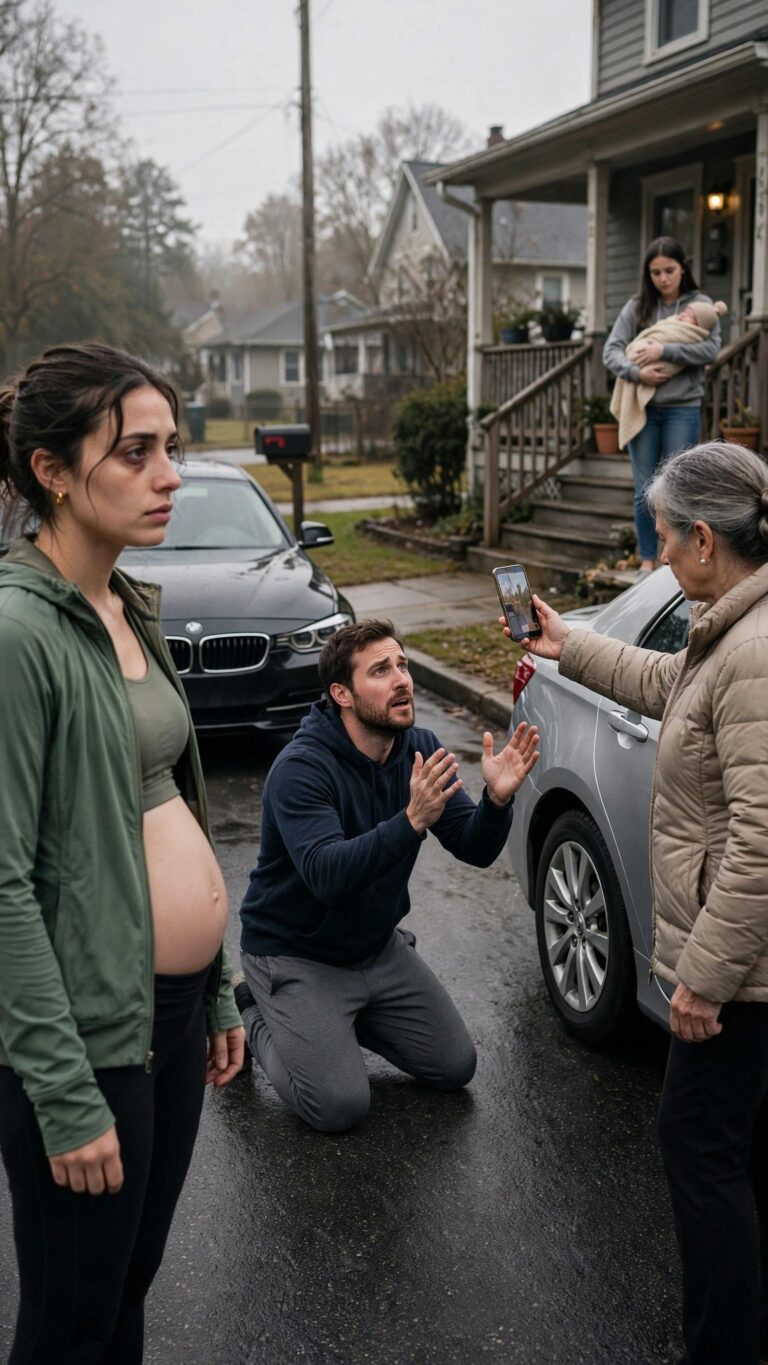
My husband of seven years, Mason Hale, was beaming beside a young woman named Tessa Blake, one hand resting proudly on her pregnant belly. The caption read simply: New beginnings.
I was still staring at my phone when it rang. The police. My black Mercedes – registered solely in my name – had been involved in a serious crash. The driver had been transported to Northgate Medical.
I drove to the hospital in someone else’s car, which struck me as darkly appropriate.
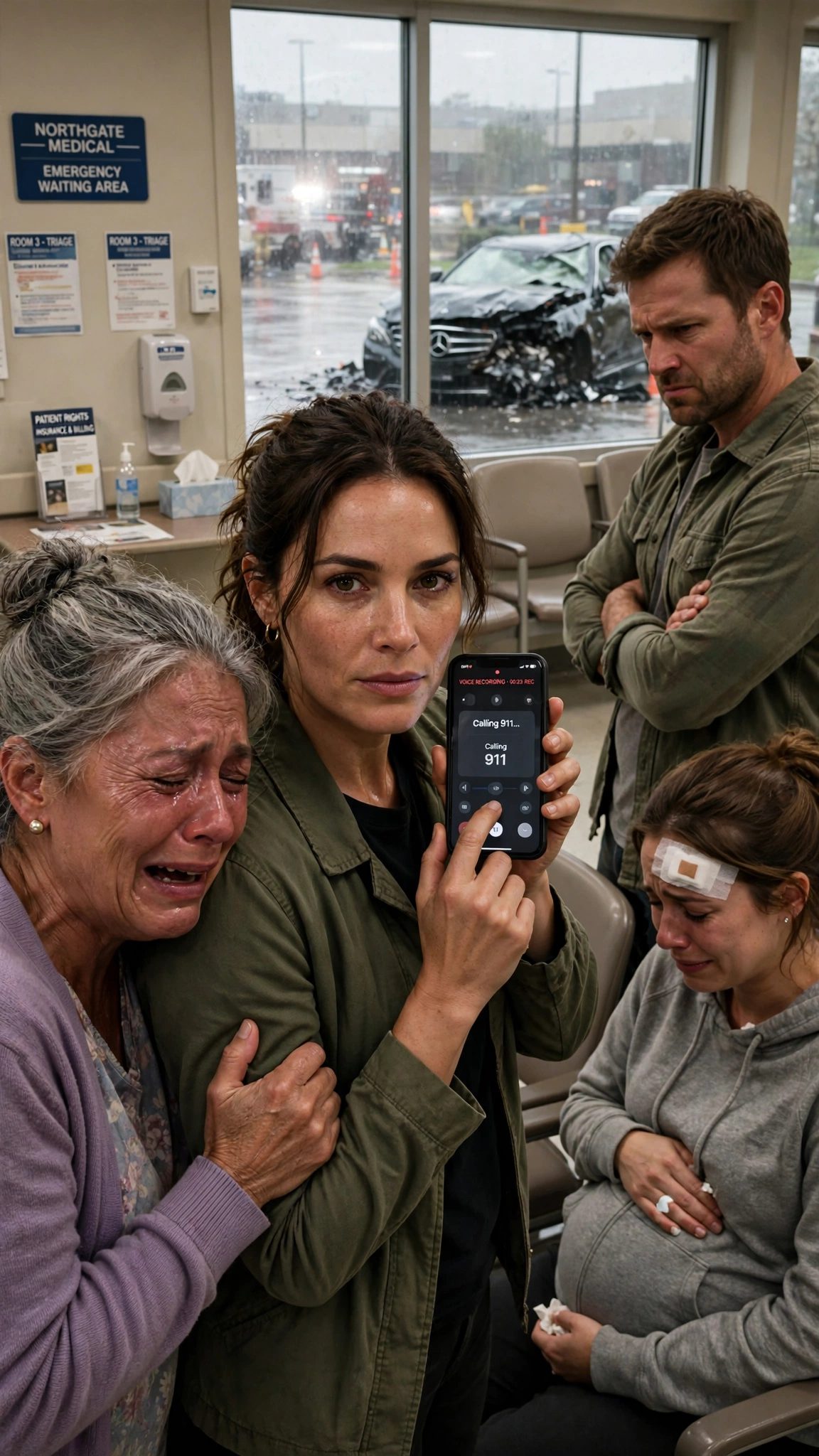
Mason was waiting near the entrance when I arrived. He looked irritated rather than ashamed, the way a man looks when a minor inconvenience refuses to resolve itself quietly. His mother, Vivian Hale, stood at his shoulder like a second opinion. Tessa sat nearby in a curtained bay, bandaged and weeping with impressive consistency.
Mason didn’t waste time on preamble. He needed me to tell the police I had been driving.
Tessa lifted her eyes long enough to explain that she couldn’t face charges – not in her condition. Her hands drifted to her stomach to underscore the point.
Then Vivian gripped my arm. Her voice dropped to the register people use when they want to sound reasonable while saying something monstrous.
“Don’t you dare ruin this family,” she whispered. “She is carrying our bloodline. A worthless woman like you has nothing to lose anyway. Just take the fall.”
I looked at all three of them. Mason with his rehearsed impatience. Tessa with her strategic tears. Vivian with her fingers still pressed into my arm as though she could hold me in place by sheer conviction.
Then I laughed.
It surprised them. It may have surprised me a little too.
I reached into my pocket and pulled out my phone. I had opened the voice recorder before I walked through the hospital doors – a small habit I’d developed over the past few weeks, once I’d begun to understand the shape of what was happening around me. Every word they had just spoken was preserved in clean digital audio.
I dialed 911.
When the dispatcher answered, I spoke clearly and without any particular drama. I reported coercion. I reported insurance fraud. I reported a coordinated attempt to compel a false statement to law enforcement.
Mason told me I was making a mistake.
I told him I had proof.
The silence that followed was the first honest thing that had passed between us in a very long time.
How You Learn to Keep the Recorder Running
I should back up.
The past few weeks I mentioned – that’s the part that matters. Because I didn’t just wake up one morning suspicious and tactical. It built slowly, the way most bad things do, in increments small enough that you keep explaining them away.
Mason started coming home late in January. Not scandalously late. Forty minutes. An hour. Enough that I noticed but not enough to make a scene over. He was in commercial real estate and the market had been weird, and that explanation fit neatly enough that I used it for a while without examining the seams.
Then in February he changed the passcode on his phone. When I mentioned it, offhand, he said he’d read an article about digital security. I remember nodding.
The thing about being a smart woman in a deteriorating marriage is that your intelligence works against you for a while. You’re good at finding explanations. You construct them quickly and they hold together and you keep moving.
It was his assistant, Donna Pruitt, who finally said something. Not directly. Donna had worked with Mason for six years and she was the kind of woman who communicated mostly in careful silences and small shifts of expression. She called me in early March to confirm a dinner reservation I hadn’t made, which was her way, I understood later, of telling me something was being kept from me without actually telling me anything. I thanked her for the call and sat with it for two days.
Then I started recording.
Not everything. Just the conversations that felt off. The ones where Mason’s voice had that particular flatness – not angry, not warm, just managed. The calls I could half-hear through the bathroom door. The one time Vivian came over for dinner and the two of them kept exchanging looks across the table that landed just outside my line of sight.
I had maybe eleven recordings by the time I saw the Instagram post. Most of them were nothing. Two of them were not nothing.
The Post
I saw it at 7:14 in the morning. I know because I’d just checked the time before I opened the app, the way you do when you’re waiting for coffee to finish.
Mason had posted it on his personal account, which I followed but rarely looked at. He wasn’t a big poster. Birthdays, the occasional work announcement, a photo from the one vacation we’d taken to Sedona three years ago that he’d captioned recharging and gotten forty-seven likes.
This photo was different.
He was standing in what looked like a nursery. Pale yellow walls, a white crib in the background, still in the box. Tessa Blake was beside him, maybe six or seven months along, and he had his hand on her stomach the way men do in those photos, that proprietary tenderness, and he was grinning in a way I don’t think I’d seen on his face in two years.
New beginnings.
I read it three times.
Then I put the phone face-down on the counter and stood there until the coffee finished.
I didn’t cry. I want to be honest about that. I thought I would, but what I actually felt was something closer to recognition. Like a word you’ve been trying to remember for weeks finally coming to you, and the relief of having it is bigger than whatever the word means.
My phone rang eleven minutes later.
The Hospital
Northgate Medical is about four miles from our house. I borrowed my neighbor Carol’s Civic, which smelled like dog and had a broken seat lever, and I drove there thinking about the recording app on my phone.
I opened it in the parking garage, third level, before I took the elevator down. I checked the microphone sensitivity. I put the phone in my left jacket pocket, screen down.
I want to be clear: I didn’t know what I was walking into. I thought maybe Mason needed help with insurance paperwork. I thought maybe there’d been a miscommunication about whose car Tessa had borrowed. I was still constructing explanations, even then. Old habit.
What I was not expecting was the three of them arranged in that curtained bay like they’d had time to rehearse.
Mason in the center, arms crossed, jaw set. Vivian just behind his right shoulder, which was her preferred position. Tessa in the bed, bandaged across her left forearm, a bruise starting under her eye. The car had clipped a concrete divider on Route 9 at roughly 6 AM. The responding officer had noted the driver seemed disoriented and had asked for the vehicle’s registered owner to be contacted.
That was me.
Mason laid it out fast, the way he always presented things he’d already decided. Tessa had taken the car without asking – he said this without looking at her, and she didn’t flinch, which told me it was agreed-upon language. The situation was complicated. A DUI charge at this stage of her pregnancy would be catastrophic. The baby’s health, the stress, the legal exposure. He said our baby once and then corrected it to the baby and didn’t look at me when he did.
All I had to do was confirm to the responding officer that I had been driving. That I’d left the car with Tessa and then had a change of plans, got a ride, and had been confused about the timeline when I first spoke to the police.
He made it sound like a scheduling mix-up.
Then Vivian grabbed my arm.
I’ve known Vivian Hale for eight years. She came to our wedding in a cream dress that was close enough to white that three people mentioned it to me during the reception. She has always spoken to me with a particular brand of warmth that has teeth in it, the kind designed to make you feel like any discomfort you experience is a result of your own sensitivity.
But that morning she dropped it entirely.
Worthless woman. She said it the way you’d say someone’s name.
And that was when I laughed.
What Happened After I Dialed
The responding officer, a guy named Garth Solis, was still in the building. He came to the bay within about four minutes of my call.
Mason tried to talk first. He has a way with authority figures, a particular register he shifts into, collegial and reasonable, that usually works. He started explaining that there had been a misunderstanding, that his wife was upset, that the situation was more complicated than it appeared.
Officer Solis looked at me.
I held up my phone and played back forty seconds of audio. Vivian’s voice was clear. Worthless woman like you has nothing to lose anyway. Just take the fall. Mason’s voice: I need you to tell them you were driving. Tessa’s voice, softer but audible: I can’t face charges. Not right now.
The bay got very quiet.
Mason’s face did something I hadn’t seen before. Not anger. Not the managed impatience I was used to. Something underneath that, something younger and less composed.
Vivian let go of my arm.
Tessa started crying again, but it was different this time. Less strategic.
Officer Solis asked Mason and Vivian to step out. He took my phone to document the recording. He asked me a series of questions in a careful, even tone, and I answered all of them.
Tessa was charged with DUI and leaving the scene. The insurance fraud referral went to a separate investigator, a woman named Paula Reyes, who called me the following Tuesday and spoke for forty minutes and took very thorough notes.
Mason’s attorney contacted my attorney – I had called one from the parking garage before I went upstairs, which I mention only because it’s the detail that makes me feel best about myself in this whole story – three days later to discuss the vehicle damage and the pending investigation.
I filed for divorce the same week.
What I Know Now
I’m not going to tell you I feel fine. Some mornings I wake up and the first thing I think about is the yellow nursery walls in that photo, and there’s a moment before I’m fully awake where I feel something I don’t have a clean word for. Not grief exactly. More like the specific tiredness of having spent years building something that was being quietly dismantled from the other side the whole time.
But here’s the thing about keeping the recorder running.
It wasn’t about catching Mason. Not originally. I started recording because I needed to trust my own perception. Because gaslighting is incremental and one of its effects is that you start to doubt your own memory of conversations, your own read on tone, your own sense of what just happened in a room. The recordings were for me first. Evidence second.
The morning I walked into that hospital, I wasn’t sure what I had. I just knew I wasn’t walking in empty-handed again.
Vivian called me two weeks after the incident. I let it go to voicemail. She left a message that was four minutes long and covered, in order: her disappointment in me, her concern for the baby’s stress levels, a suggestion that I had always been emotionally unstable, and a closing remark about how Mason had given me the best years of his life.
I saved that recording too.
Paula Reyes thought it was useful.
—
If this one hit close to home, send it to someone who needs to hear it.
If you’re looking for more