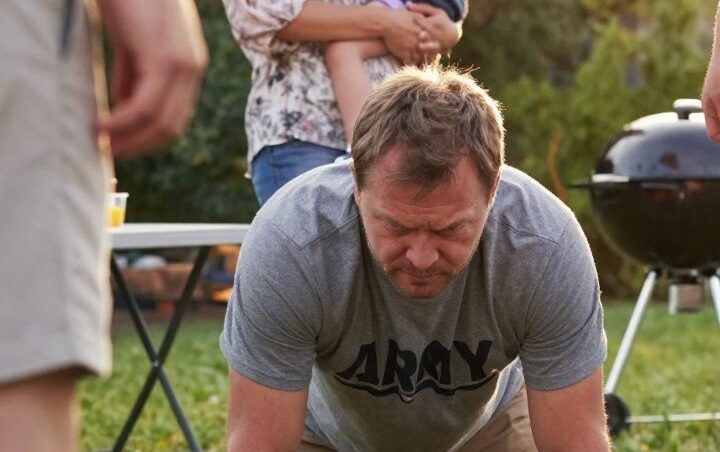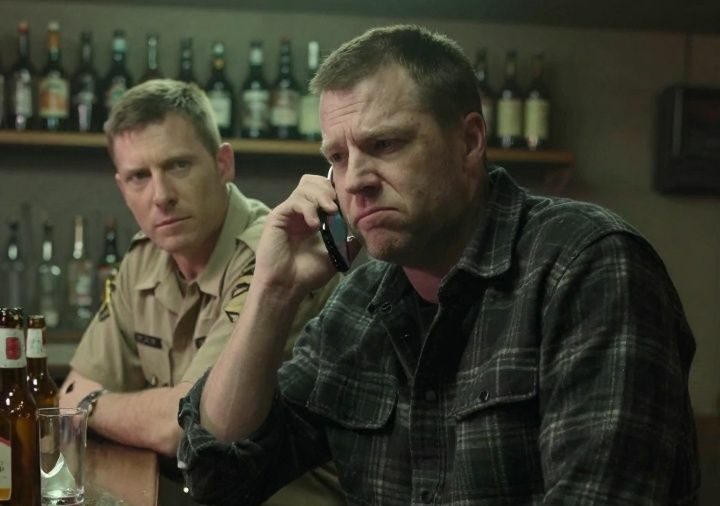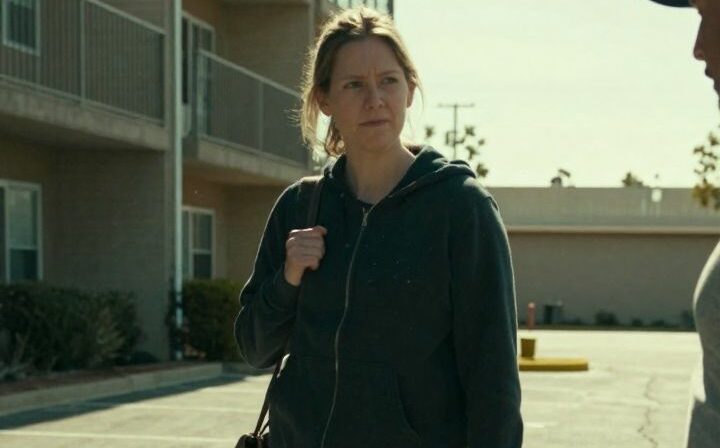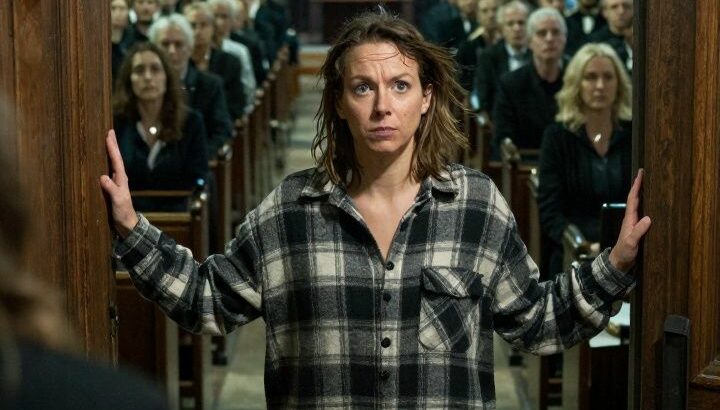

The priest was reading my eulogy when the cathedral doors SLAMMED open behind two hundred mourners – and every head turned to look at the dead woman standing in the doorway.
That dead woman was me.
Three days earlier, my husband Derek drove me up to a cabin near Wolf Creek, said he wanted to fix our marriage, then locked the door from outside and took both vehicles.
I’ve spent eleven years teaching Special Forces candidates how to survive when everything is trying to kill them.
He forgot that.
I am a survival instructor for the Army. Cold-weather endurance, escape, evasion. The $400,000 military life insurance policy was supposed to cover our daughter Hannah’s future if I died downrange.
Not if my husband killed me in the mountains.
It took me two nights to break the window seal, pack snow into insulation, and walk eighteen miles to a logging road.
I hitched a ride into town from a man hauling firewood.
That’s where I saw the funeral notice. My funeral. A hundred-thousand-dollar service at Saint Matthew’s, paid for before my body was even “found.”
I stood outside that cathedral in borrowed clothes and watched through the glass.
Derek was in the front row.
Beside him sat Megan, the woman from his office I’d suspected for a year. His hand was on her knee at my funeral.
I crept close to a side door and heard them.
“Once the payout clears, we sell the house,” Derek said. “Cabo by spring.”
“And Hannah?” Megan asked.
“Boarding school. She’ll get over it.”
My own daughter, eight years old, sitting two rows back, crying into my mother’s coat.
Everything in my body went quiet.
Then I walked around to the front, put both hands on those heavy doors, and pushed.
The eulogy stopped mid-sentence.
Megan screamed. Derek stood so fast his chair scraped the marble.
“You’re DEAD,” he said. “You’re supposed to be DEAD.”
I walked down the aisle past the empty mahogany casket while the whole room went silent.
Then a man in a gray suit rose from the back pew, stepped into the aisle, and held up a badge.
“Mrs. Calloway,” he said. “We’ve been recording his calls for six weeks. There’s something you need to hear before you say a single word.”
What the Mountain Taught Me in Forty-Eight Hours
I want to back up, because the cathedral part is the part everyone fixates on, and I get it. But you need to understand what the two days before it felt like, or none of the rest of it makes sense.
The cabin was Derek’s idea. He’d been pitching it for a month. Marriage retreat, he called it. No phones, no distractions, just us reconnecting. He even used that word. Reconnecting.
I should have noticed he packed light. One bag. I packed for five days.
We drove up Friday afternoon, arrived after dark. The cabin belongs to a man Derek knows from his firm, a property lawyer named Garrett who has three of them scattered across the Rockies and rents them out mostly to hunters. This one sat about four miles off a county road, up a switchback that turns to ice in November. We were there November 8th.
Derek made dinner. Opened a bottle of wine I didn’t finish because I was tired from the drive. In the morning he was gone. Both keys to the truck. My phone had no signal, which wasn’t unusual up there, but when I went to the door it wouldn’t open from the inside. The handle turned. The door didn’t move.
He’d driven a bolt through the exterior latch with something, a padlock or a hasp, I couldn’t tell. I didn’t panic. I want to be clear about that. I didn’t panic because panic is a metabolic event and I had limited calories and a temperature outside that was sitting around eighteen degrees.
I sat down and made a list.
Assets: one sleeping bag rated to minus twenty, a camp stove with two fuel canisters, four days of food I’d packed, a fire axe mounted on the wall that was decorative but still an axe, two wool blankets, my boots, and eleven years of doing this for a living.
Liabilities: no phone signal, one door with an exterior lock, windows with storm seals that hadn’t been broken in probably five years, and a husband who had apparently decided I was more valuable dead.
The window seal took me most of the first night. The storm windows on those old cabins are set into wooden frames with a bead of caulk that hardens like ceramic in the cold. I used the back of a butter knife and worked it for three hours until I got the lower left corner loose. By morning I had a gap I could get my fingers into.
I didn’t break the glass. Breaking glass meant cold air in immediately, and I needed to plan the exit before I committed to it. I spent the second day packing the window frame with snow on the outside to insulate the gap, then slept, then woke at two in the morning and went.
Eighteen miles. The logging road showed up on the far side of a ridge I recognized from the drive in. I’d been watching out the truck window on the way up, the way I always do, because that’s just how my brain works in unfamiliar terrain.
I reached the road around seven in the morning. My feet were fine. My hands were not. The man who picked me up was named Walt, drove a green F-250 stacked with split pine, and he took one look at me and didn’t ask a single question until we were twenty minutes down the mountain. Then he just said, “You need a hospital or a phone?”
I said phone first.
Then I saw the funeral home sign.
The Notice in the Window
Walt had pulled into a gas station in Creston, a town of about four thousand people, the kind of place with one hardware store and a diner that closes at two. The funeral home was across the street. Delacroix and Sons, white building, black awning.
There was a printed notice in the window.
I could read my own name from the gas station parking lot.
Memorial Service for Renata Calloway. Saint Matthew’s Cathedral. Saturday, 11 a.m. In lieu of flowers, donations to the Hannah Calloway Education Fund.
I stood there in Walt’s borrowed Carhartt and read it three times.
Saturday was tomorrow.
Derek had filed a missing persons report the same night he left, according to what I pieced together later. He’d called it in from a gas station forty miles from the cabin, said I’d gone for an evening hike and hadn’t come back, that he’d searched until dark and feared the worst. Search and rescue had gone up the next morning. They’d found my jacket, which Derek had left on a trail about a mile from the cabin, weighted down with a rock so it wouldn’t blow.
He’d planned that. He’d brought a jacket of mine specifically to leave behind.
The county had issued a presumptive death notice within thirty-six hours based on the conditions and the “evidence.” I learned later that Derek had a lawyer on standby, a different one from Garrett, who walked the paperwork through in under a day.
The insurance company had already been contacted.
I stood outside Saint Matthew’s the next morning and watched through the side window for twenty minutes before I went in. I needed to see where Hannah was sitting. I needed to know she was okay before I walked through those doors, because I had no idea how an eight-year-old processes seeing her dead mother come back, and I wasn’t going to wing it.
She was in the third row with my mother, Carol, who had her arm around Hannah’s shoulders and was staring at the floor with the particular look my mother gets when she is holding herself together by willpower alone.
Derek was in the front row in a black suit I’d never seen. New suit. Bought for the occasion.
Megan sat beside him in navy blue. Not black. Navy blue, like she’d thought about it.
The Aisle
The doors at Saint Matthew’s are solid oak, eight feet tall, and they swing on old iron hinges that haven’t been oiled since probably the nineties. They make a sound when they open.
They made a sound.
Father Brennan was mid-sentence, something about grace and mountains, which would have been funny under different circumstances. He stopped. The whole room turned.
I don’t know exactly what I looked like. I’d cleaned up in the gas station bathroom, changed into clothes Walt’s wife Karen had given me from a bag she kept in the truck for the church donation box. Jeans. A green flannel. My own boots. My hair was down. I hadn’t slept more than four hours in two days and I’d walked eighteen miles in subzero cold, so probably I looked like something dragged out of a glacier.
Megan screamed. She didn’t just gasp; she screamed, full voice, and grabbed Derek’s arm.
Derek stood up. His chair hit the marble and the sound cracked through the cathedral like something breaking.
“You’re DEAD,” he said. “You’re supposed to be DEAD.”
Not how are you alive. Not oh my God, Renata. Not anything a person says when they’re relieved.
You’re supposed to be dead.
Two hundred people heard him say that.
I kept walking. Past the empty casket, which was mahogany with brass handles, the kind that costs eleven, twelve thousand dollars. He’d bought a casket. For a body that hadn’t been found.
Hannah made a sound I will hear for the rest of my life. Not a word. Just a sound. And then she was out of the pew and running and I dropped to my knees right there in the aisle and she hit me hard enough that I rocked back on my heels.
I held onto her and didn’t let go for a long time.
The Man in the Gray Suit
I was still on my knees with Hannah when I heard him.
“Mrs. Calloway.”
I looked up. Gray suit, maybe fifty, broad through the shoulders with the kind of face that doesn’t give much away. He had a badge in one hand, open, and he held it long enough for me to read it.
FBI.
“We’ve been recording his calls for six weeks,” he said. “There’s something you need to hear before you say a single word.”
His name was Special Agent Dennis Pruitt. He walked me and Hannah to a side room off the nave, a small room with folding chairs and a table, the kind of room where they do pre-baptism counseling. My mother came with us. Derek did not go anywhere, because there were two other agents in the room by then who had materialized out of the back pews like they’d been there all morning.
They had been there all morning.
Pruitt explained it in the flat, factual way of someone who has done this before. Derek had been under financial crimes investigation for eight months. Money moving through client accounts at his firm, not his own money, client money. The insurance fraud scheme, Pruitt said, wasn’t the original play. It became the play when the financial investigation got close enough that Derek needed a large, clean sum of money to cover what he’d taken.
Four hundred thousand dollars, minus taxes, minus lawyer fees, minus the hundred thousand he’d already spent on the service and the casket and whatever else, still left him enough to run.
Cabo by spring. He’d actually said it out loud, at my funeral, sitting next to his girlfriend, with my daughter two rows back.
They had seventeen recorded calls. Three of them were Derek and Megan discussing the cabin plan in enough detail that Pruitt said, quietly, the words “attempted murder” were on the table alongside the fraud charges.
“We were waiting,” Pruitt said, “because we needed him to take the final step. The insurance claim. He filed it Thursday morning.”
Thursday morning. While I was still on the mountain.
I looked at him.
“You knew I was up there.”
He didn’t flinch. “We knew the plan. We didn’t know you’d get out on your own. We had a team staged at the base of the mountain Friday night.”
“I came down Saturday morning.”
“Yes.”
There’s a version of that where I’m angrier. I’ve thought about it. But the truth is I was down before they expected me to be, and I was down because I know how to come down, and sitting in that little counseling room with Hannah’s face pressed against my neck, I didn’t have room to be angry at Pruitt.
I had other things to be angry at.
What Happened After
Derek was arrested in the cathedral. They did it quietly, which I appreciated, because Hannah didn’t need to see handcuffs in a church.
The charges ended up being attempted murder, insurance fraud, wire fraud, and four counts of financial crimes against his clients. The financial crimes alone carry fifteen years. The attempted murder charge, Pruitt told me later, was the one the prosecutor was most confident about, because of the calls, because of the jacket left on the trail, because of the padlock hasp they found in Derek’s car.
He’d kept the padlock hasp in his car. In the center console.
Megan was charged as a co-conspirator. She took a plea. I don’t know what she got and I don’t think about her much.
The cabin owner, Garrett, was not charged. They looked at him and found nothing. I believe that. Derek used the cabin without telling him why.
Hannah is nine now. She sees a therapist named Dr. Faye Marsh, who is patient and funny and has a dog that comes to sessions, and Hannah loves the dog more than the therapy but they’re a package deal so it works out.
We live in the same house. I thought about selling it but Hannah didn’t want to move schools, and it’s her house too. I repainted Derek’s office. It’s a reading room now.
My mother Carol moved into the neighborhood six months ago, into a rental three streets over. She says it’s temporary. It’s not temporary.
I still teach. Cold-weather endurance, escape, evasion. I go back to work every Monday morning and stand in front of a room full of people learning how to survive when everything is trying to kill them, and I teach them the same things I’ve always taught them.
Make your list. Work the problem. Don’t panic.
Don’t let anyone know what you’re capable of until you need them to know.
—
If this hit you somewhere real, pass it along to someone who needs it.